By cell count, you are roughly half bacteria. That is not a metaphor: a 2016 estimate put the number of bacteria in a reference adult at about 38 trillion, compared with about 30 trillion human cells. Most of them live in your gut — and many of them depend on what you eat.
The video loads from YouTube (privacy-enhanced mode) only after you press play.
A crowded, lightweight community
The same study updated a famous claim. The often-quoted ratio of ten bacterial cells for every human cell turned out to be outdated: the two numbers are of the same order. And all those bacteria together weigh only about 0.2 kilograms.
Fibre is food for microbes
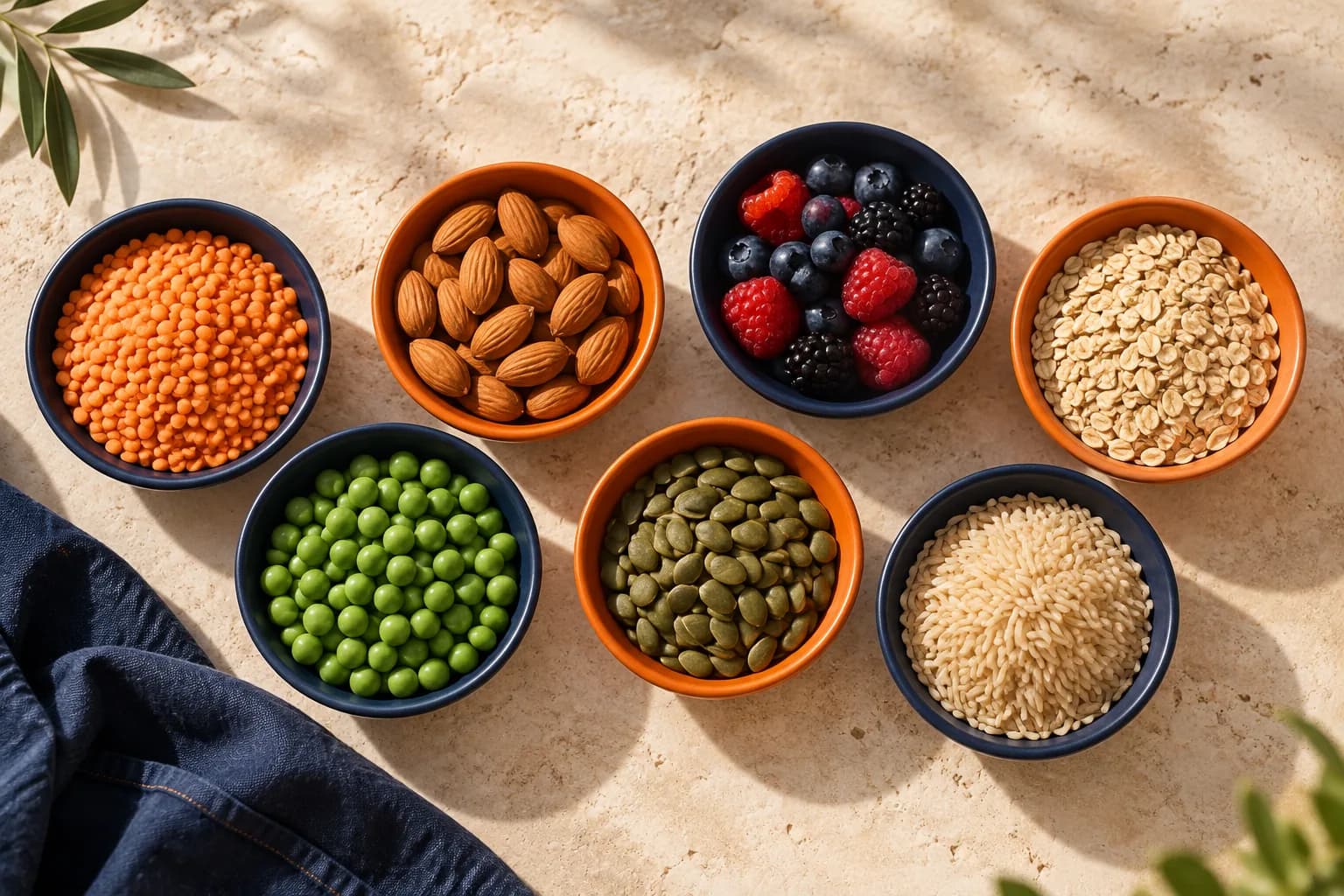
Dietary fibre is the part of plant foods your own enzymes cannot fully break down. In the large intestine, gut bacteria ferment it, producing short-chain fatty acids — compounds that researchers are studying for their roles in the gut and beyond.
What large studies show
A series of systematic reviews published in The Lancet in 2019 combined 185 prospective studies and 58 clinical trials. People who ate the most fibre had 15 to 30 percent lower rates of several conditions, including heart disease, type 2 diabetes and colorectal cancer, compared with those who ate the least. The associations were strongest at around 25 to 29 grams a day.
Most of these data are observational. They show strong, consistent links, and the authors argue the relationships could be causal — but observational studies on their own cannot prove cause and effect. The findings also apply to the general population, not to treating people who already have a disease.
How much is suggested?
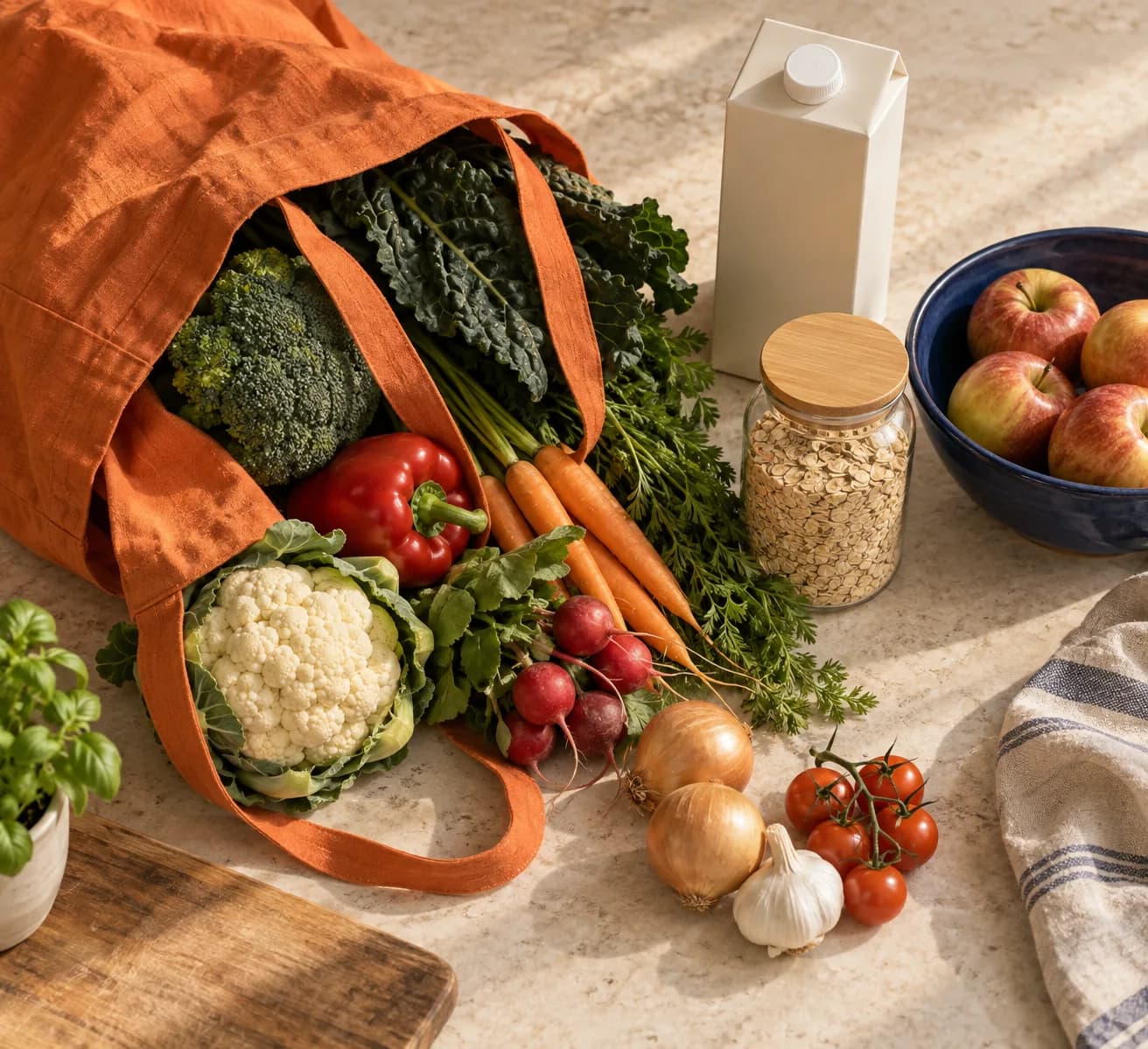
The World Health Organization suggests that everyone over the age of 10 aims for at least 25 grams of naturally occurring dietary fibre a day — from vegetables, fruit, legumes and whole grains — with smaller amounts for younger children.
People with digestive conditions such as irritable bowel syndrome or inflammatory bowel disease should get individual advice before changing their fibre intake.
In short
- Your body hosts roughly as many bacterial cells as human cells.
- Gut bacteria ferment fibre into short-chain fatty acids.
- Higher fibre intake is linked to lower rates of several conditions in large observational studies.
- WHO suggests at least 25 g of naturally occurring fibre a day for people over 10.
Notice your own patterns
Dietlas includes fibre in your daily nutrition breakdown, so you can see whether your meals feed your microbes too — and which everyday foods do most of the work.
Dietlas is a food log, calorie and macro estimator and fasting timer in one app. It helps you see what, how much and when you eat — awareness first, no promises.
The App Store listing is in Apple's review and goes live shortly.
The path to a healthy life goes through knowing your body.
Sources
Every factual statement in this article is based on the publications below. Links open the original paper or official page.
- Sender R, Fuchs S, Milo R. Revised Estimates for the Number of Human and Bacteria Cells in the Body. PLoS Biol. 2016;14:e1002533. doi:10.1371/journal.pbio.1002533 · PMID 27541692
- Makki K, Deehan EC, Walter J, Bäckhed F. The Impact of Dietary Fiber on Gut Microbiota in Host Health and Disease. Cell Host Microbe. 2018;23:705-715. doi:10.1016/j.chom.2018.05.012 · PMID 29902436
- Reynolds A, Mann J, Cummings J, Winter N, Mete E, Te Morenga L. Carbohydrate quality and human health: a series of systematic reviews and meta-analyses. Lancet. 2019;393:434-445. doi:10.1016/S0140-6736(18)31809-9 · PMID 30638909
- World Health Organization. Healthy diet (fact sheet). https://www.who.int/news-room/fact-sheets/detail/healthy-diet
- World Health Organization. Carbohydrate intake for adults and children: WHO guideline. 2023. https://www.who.int/publications/i/item/9789240073593